Meddy

In the midst of a national healthcare worker shortage...how might we mitigate the confusion and stress that comes with applying for medical school?

Scroll through my Behance page

undergraduate design capstone

This work was meticulously planned and passionately completed as a solo project to close my undergraduate studies.

my role

UX Researcher
UX/UI Designer

SKILLS

Research planning & execution
Stakeholder interviews
Focus groups
UI design & prototyping
background

The Changing Medical Landscape

The healthcare world as we know it is changing rapidly, both visibly and behind the scenes. The push for tech-driven, patient-centric experiences present opportunities in value-based and preventative care models. However, support for frontline workers often falls to the wayside in order to appease the business of hospital systems. We are already in the throes of a post-pandemic healthcare worker shortage, and without candid guidance early in professionals' educational careers, we risk widening the gap between education and training.

My inspiration for addressing one part of this great problem came as I witnessed close friends applying to medical schools under extreme pressure. Being a full-time student was no longer enough: if you can study for the rigorous, 8-hour MCAT, excel in your test results, prove your years of time commitment to service work and shadowing professionals and conducting research, then you may just have the opportunity to spend hundreds of dollars and dozens of hours applying to schools.

The problem that prevails is that students struggle to evaluate their own application readiness. No comprehensive platform exists to compile application information into one place — at least, not without a high cost — and not all universities have an official pre-med program, let alone a dedicated advising team. I started with students and advisors to understand the application process, how students manage their work and expectations, and how advisors identify problem areas that inhibit application readiness. Meddy aims to track and advise all in one interactive space.

primary & secondary research

Asking A Thousand Questions

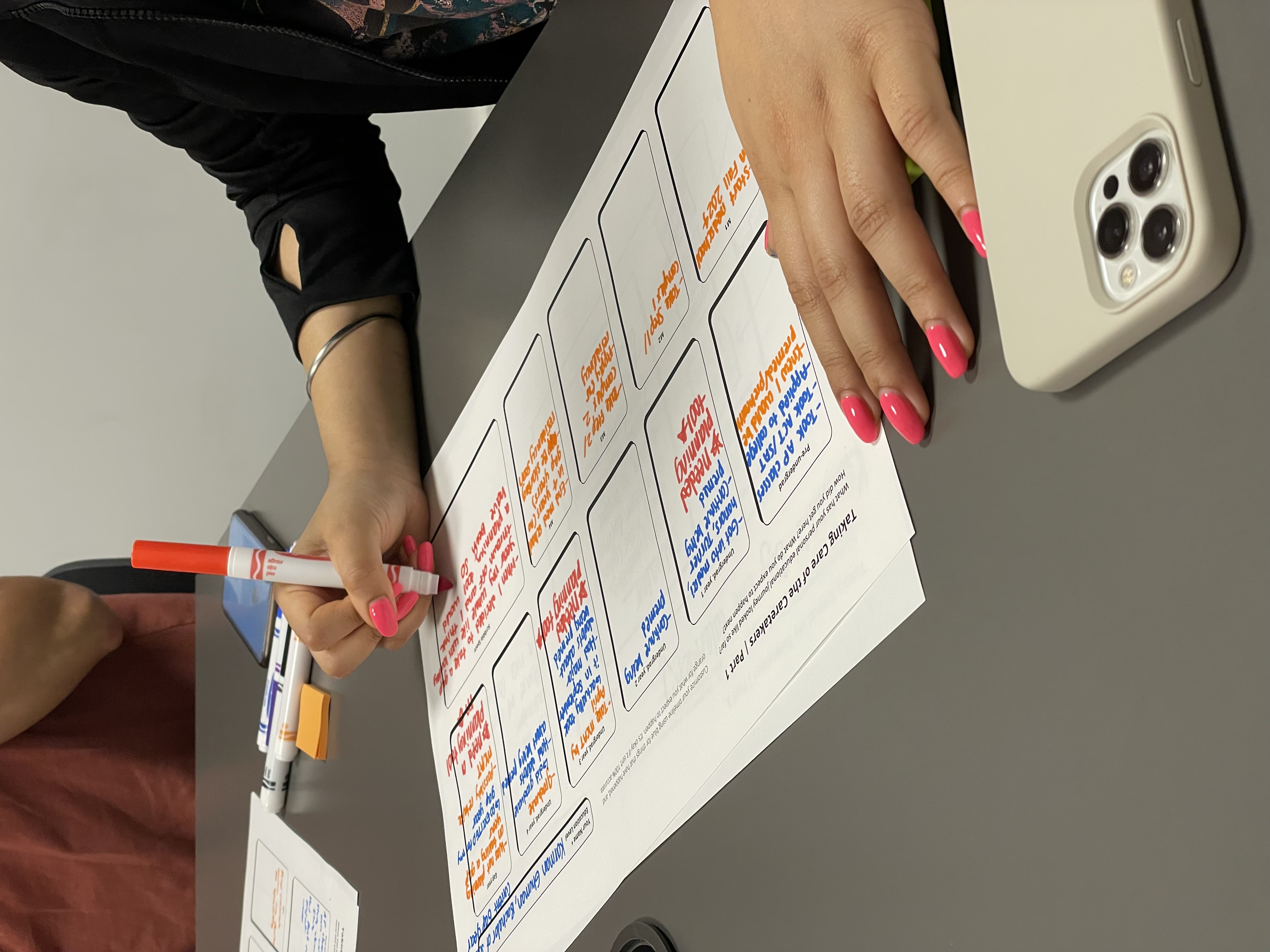
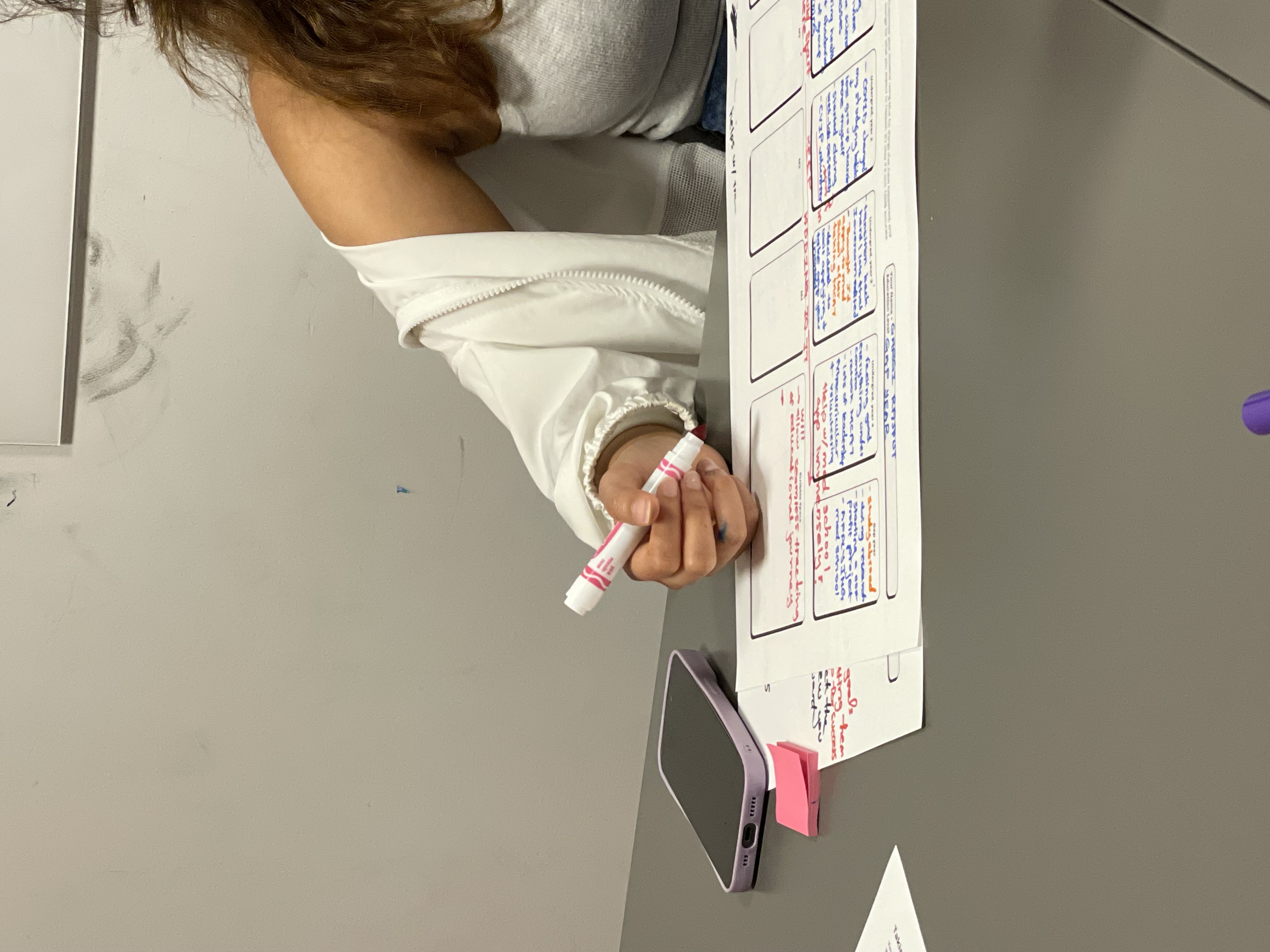
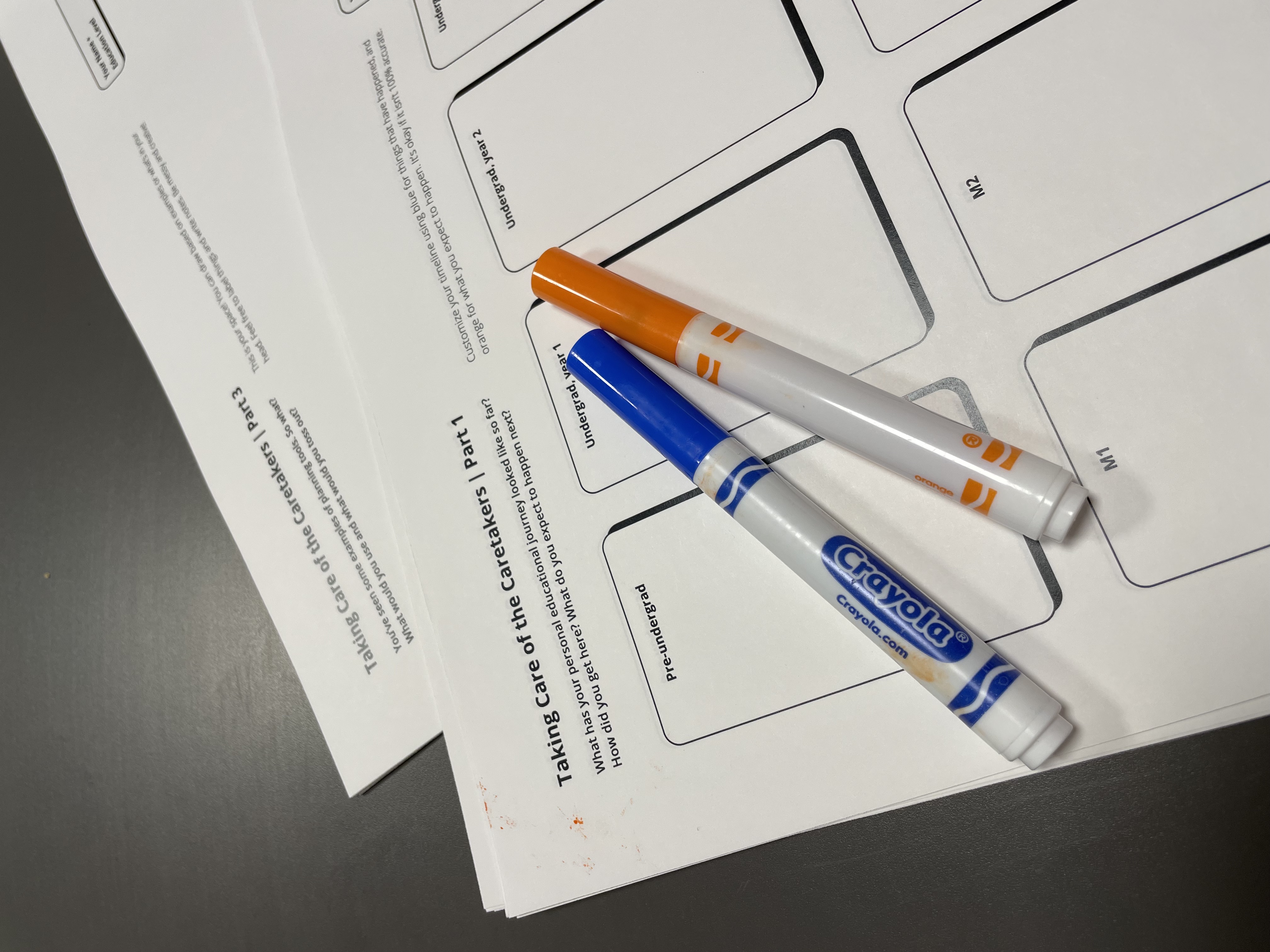
After scouring the AAMC website, reading and watching student blogs, and chatting with friends at various stages of their medical education, I began formal reseach in four steps.
I returned to these participants to collect feedback on visual design and UI prototyping through workshops and one-on-one interviews. More visuals are available at request, and I'm happy to share my live Figma prototype on a virtual call.
Show me more!

FINDING THE PURPOSE

Helping Students Tell Their Story

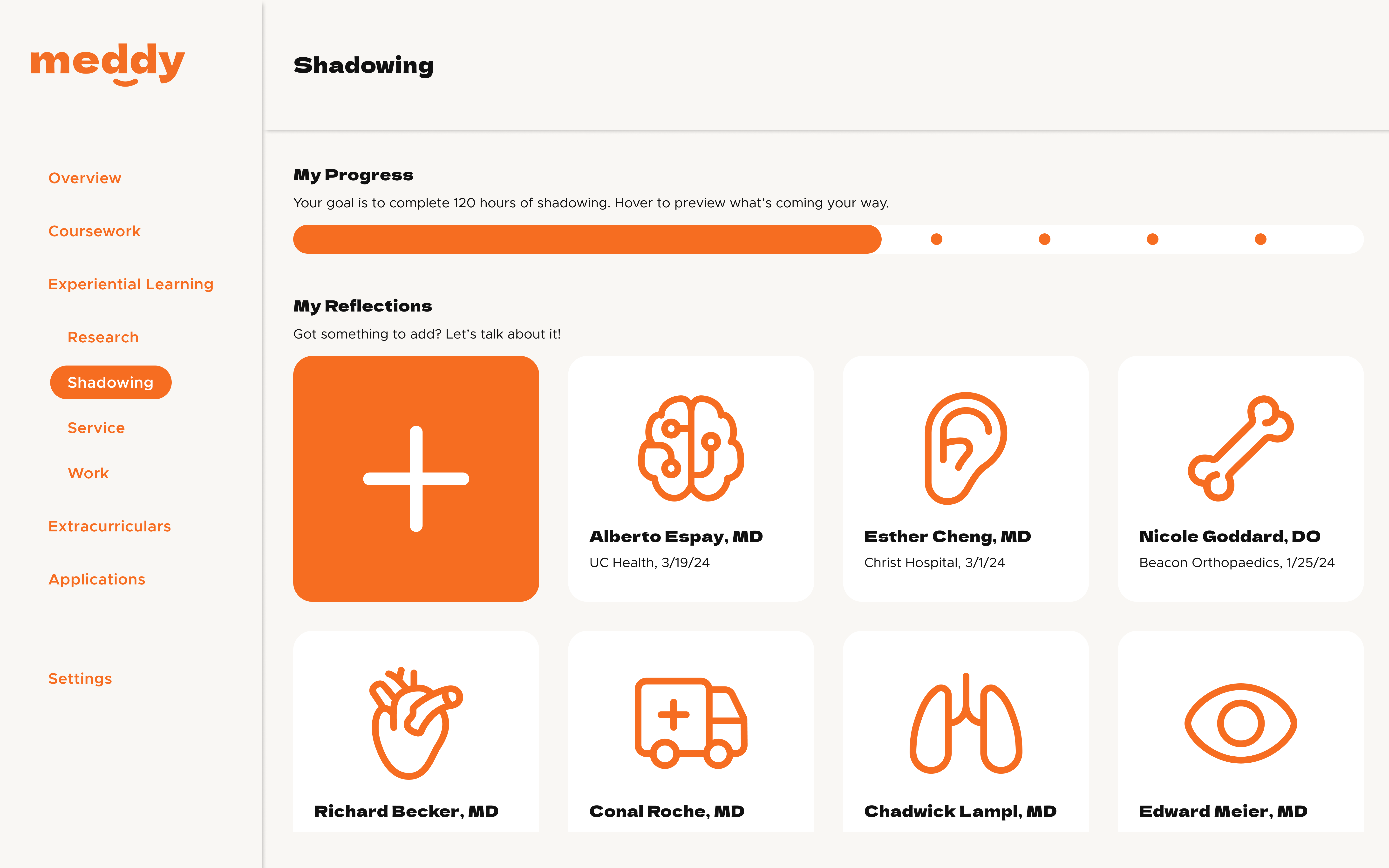
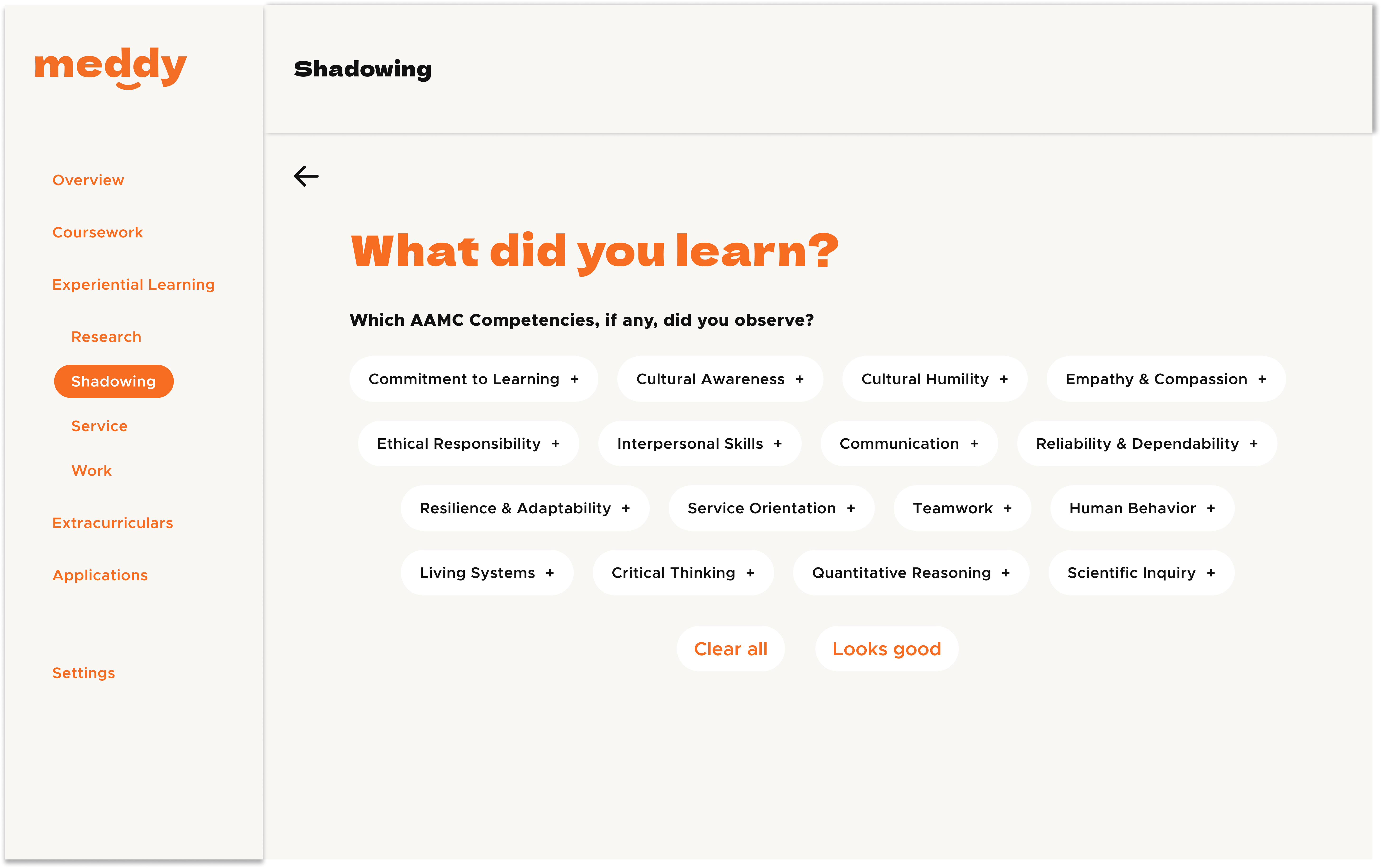
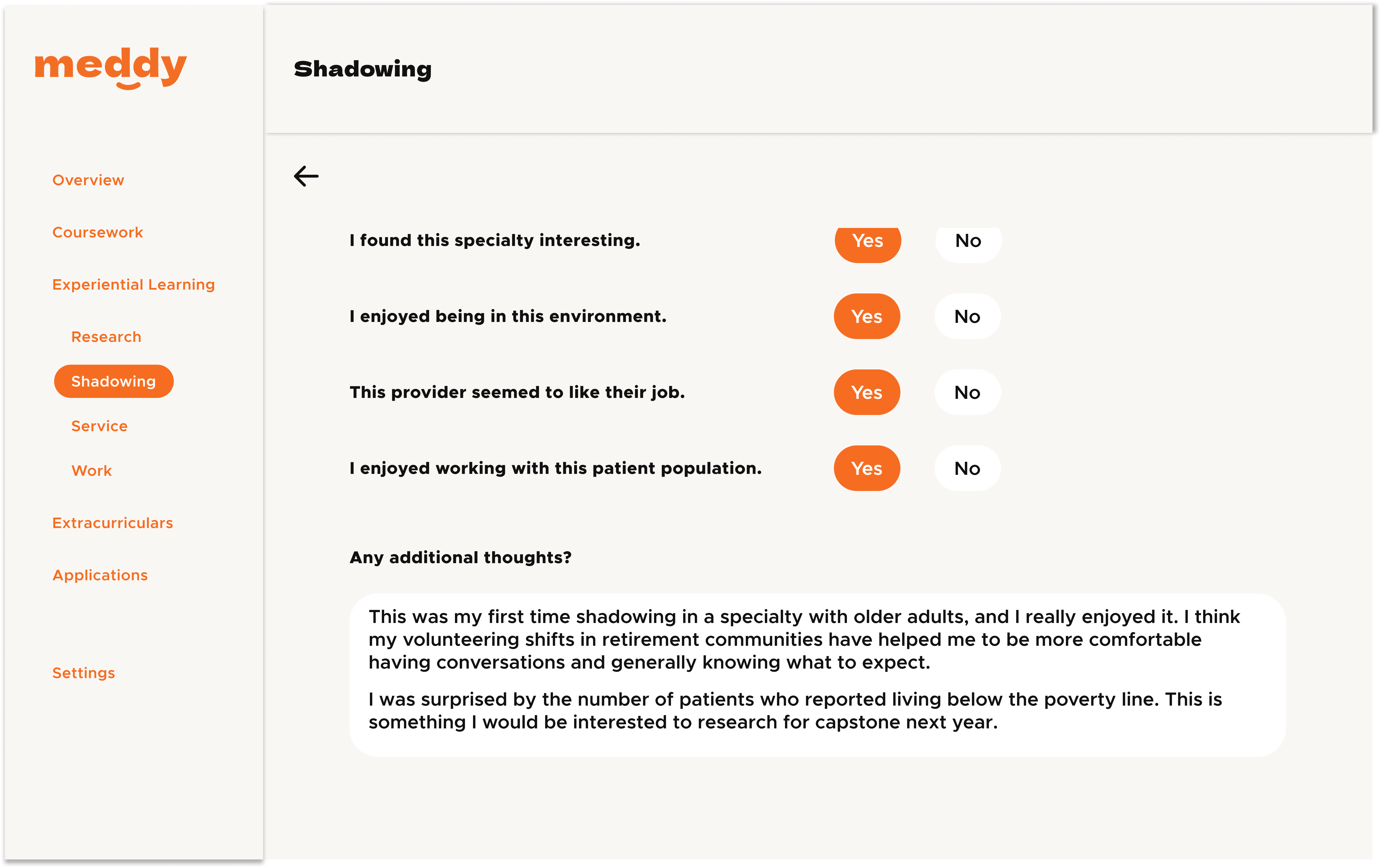
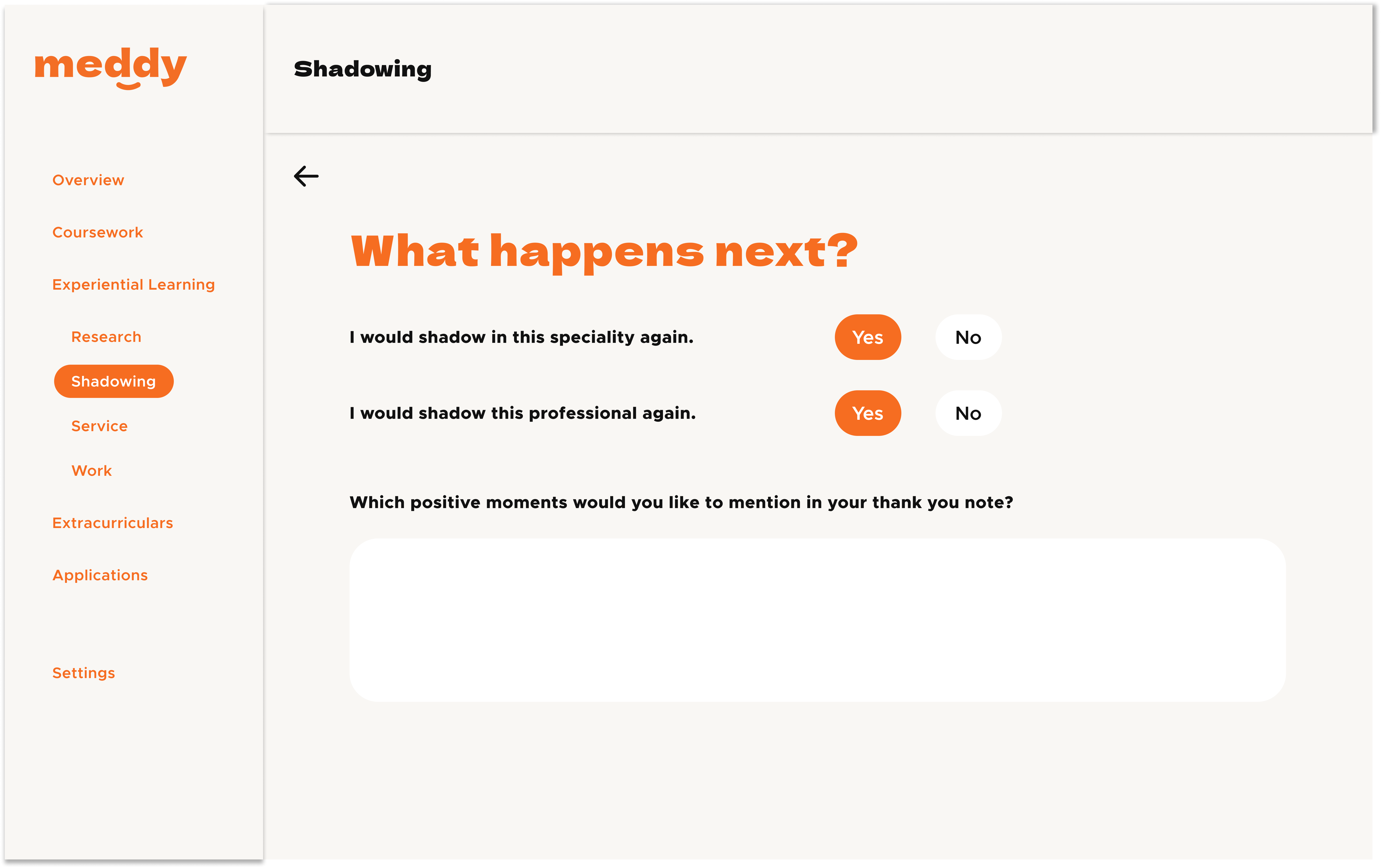
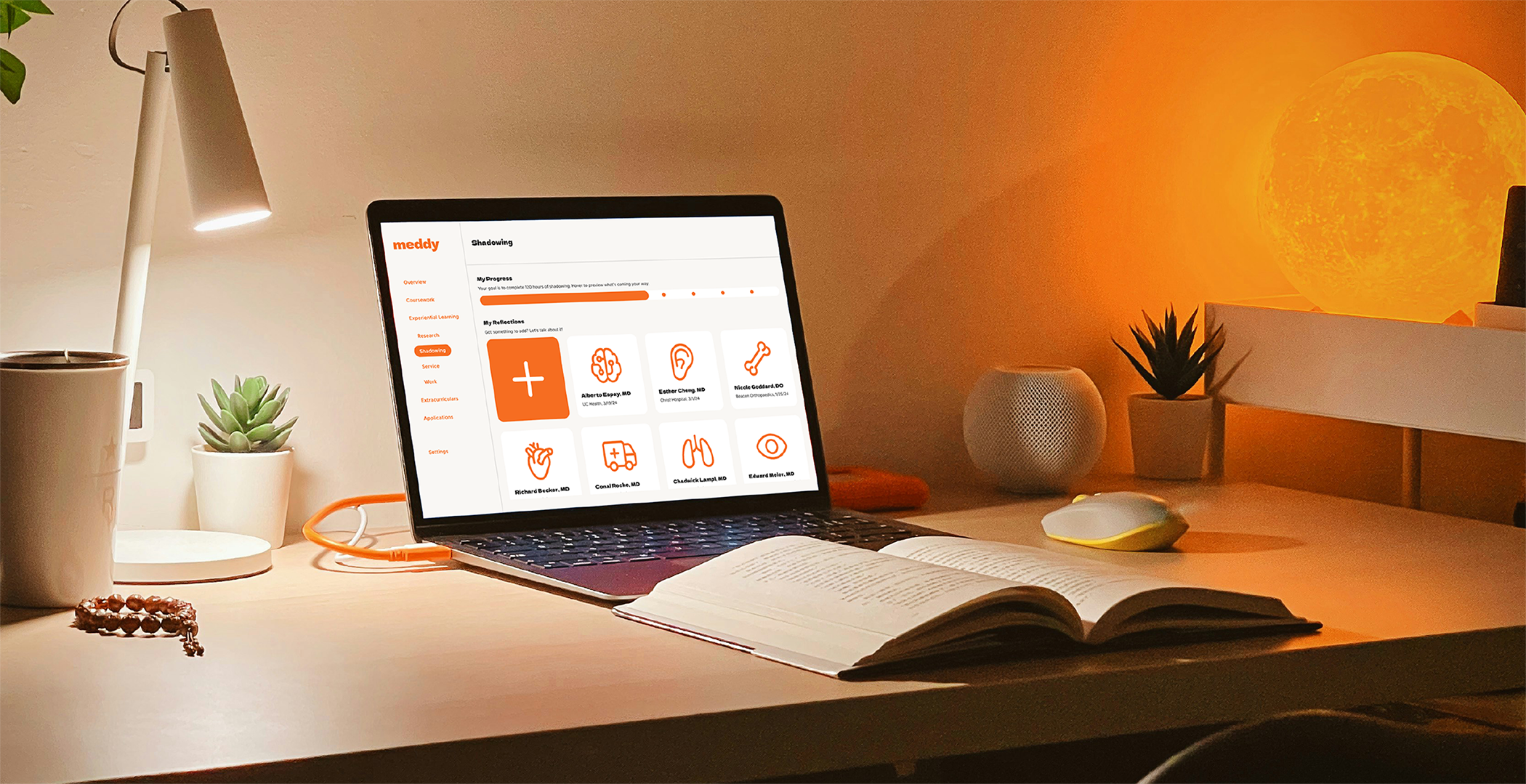
Meddy emphasizes reflection on experiential learning rather than simply logging hours and tasks. It also guides the student in recognizing whether they are on track to apply against AAMC criteria, and provides a detailed timeline to inform the student's choices.

Meddy is designed for all pre-med students, no matter their undergraduate major, year in school, or their understanding of the application process.

Meddy is NOT, however, intended to replace traditional advising. It is a self-evaluation tool to supplement the student's efforts and provide tangible talking points that translate at any stage, from advising meetings to school interviews.

IMPACT

Removing Barriers to Educational Support

By eliminating the guesswork from this process, students can confidently apply in just one cycle. This can save thousands of dollars in application, testing, and tutoring fees, countless hours of studying and writing, and immeasurable stress by not having to start over.

BUT WAIT! there's more!

Moving Forward with Meddy

In its current state, Meddy is not a fully developed app. I intend to continue to explore this concept with software developers in the future to explore ways to bring it to life.

If you'd like to learn more about my plans, or even be a part of it, I would love to chat.
Let's Talk About Meddy